
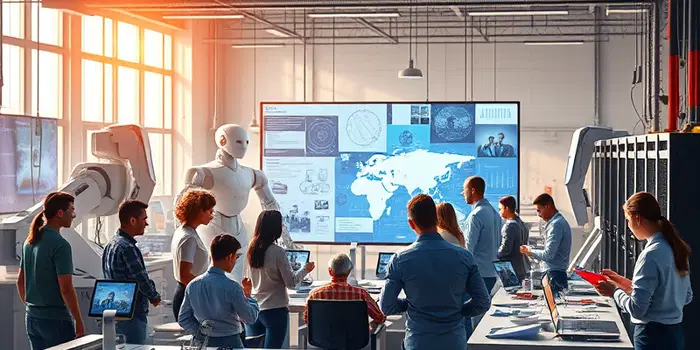
As the dawn of advanced automation and artificial intelligence approaches, we stand at a crossroads in labor history. The rapid integration of AI and robotics promises not simply to replace human effort, but to redefine the very nature of work. This transformation offers opportunities for innovation and prosperity—yet also poses serious challenges for displaced workers, skill development, and equitable growth.
In this exploration, we delve into the forces reshaping tasks and occupations through 2030, assessing economic impacts, revealing global projections, and outlining practical steps individuals, businesses, and policymakers can take to build an inclusive, adaptive future.
Rather than wholesale job elimination, automation is likely to substitute machines for selected tasks within diverse occupations. By analyzing jobs at the task level, we see that many roles will evolve instead of vanish. Technology may handle routine data entry or standardized processes, freeing people to focus on higher-value activities.
Teams will increasingly rely on greater collaboration between humans and AI, combining human judgment, creativity, and empathy with machine precision and speed. This trend redefines roles across sectors—from healthcare providers using AI diagnostics to teachers leveraging adaptive learning platforms.
By 2030, the World Economic Forum projects that the labor market will witness vast structural shifts. Of today’s formal jobs, approximately 22% will experience significant disruption, driven by technology alongside demographic, geopolitical, and green-transition forces.
Furthermore, technology trends alone are expected to create 11 million jobs while displacing 9 million, underlining a modest net gain but significant task reallocation. In 2025, humans performed roughly 47% of tasks unaided, compared with 22% by machines. By 2030, human-only tasks may decline by 15 percentage points—82% due to automation and 19% through expanded human-machine collaboration.
As roles evolve, skill sets must keep pace. Around 39% of existing worker skills will be transformed or become outdated over the same period, underscoring growing need for retraining and lifelong learning supported by employers and educational institutions.
Automation influences economies through multiple channels. First, productivity gains from reduced errors and continuous operation can raise output per worker. Generative AI accelerates writing, coding, research, and customer service, enabling employees to focus on complex, creative, or interpersonal tasks.
Second, lower production costs may translate into lower prices, stimulating consumer demand and job creation in expanding sectors. In highly competitive markets, productivity dividends reach consumers directly, while in concentrated markets, firms may reinvest profits into innovation or expansion.
Third, automation spurs substantial investment in computing infrastructure, data centers, software, and worker training. Although large firms often lead adoption thanks to greater capital and technical expertise, supportive policies and partnerships can help smaller businesses access necessary resources.
The automation era heralds growth in both high-tech and human-centric occupations. Fastest-growing roles include big-data specialists, AI and machine-learning professionals, cybersecurity experts, and digital transformation specialists. Simultaneously, demographic shifts and the green transition will boost demand for healthcare workers, renewable-energy engineers, educators, and frontline service providers.
Workers in routine, repetitive roles—such as basic administrative processing, standardized customer service, and certain manufacturing tasks—face higher exposure to automation. However, exposure does not equate to elimination when AI augments productivity and market demand rises.
Empirical evidence on wages and employment remains mixed. PwC’s Global AI Jobs Barometer finds that many AI-exposed occupations experienced both wage growth and job expansion, suggesting that technology can create new value. Yet Stanford research highlights a 19% employment shortfall among 22- to 25-year-olds in highly exposed roles, pointing to an entry-level employment problem for young workers.
To harness automation’s promise, stakeholders must collaborate. Employers should invest in reskilling programs and identify high-value roles in evolving workflows. Workers can proactively update skills—embracing digital literacy, critical thinking, and interpersonal communication. Policymakers should design social safety nets that ease transitions, fund lifelong learning, and ensure productivity gains benefit broader society.
By recognizing the transformative power of machines as partners rather than replacements, we can chart a future of work that combines human ingenuity with technological prowess—driving sustainable growth, inclusive opportunity, and a renewed sense of purpose for every worker.
References