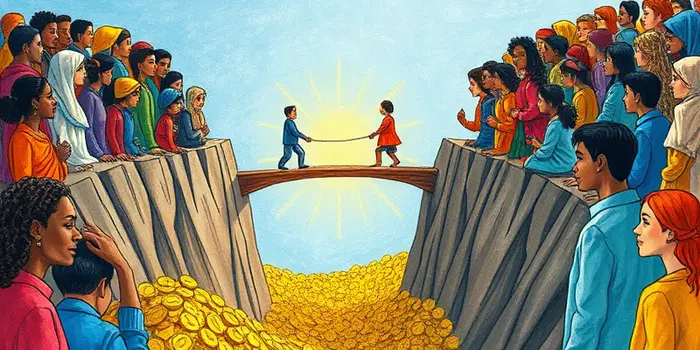
The gulf between the wealthy and the rest of society is not simply a difference in bank balances—it is a defining challenge of our time. In 2025, the richest 10% of adults held approximately 75% of global personal wealth, while the bottom half owned a mere 2%. At the extreme apex, fewer than 60,000 individuals control more wealth than billions combined. This stark reality demands urgent reflection and action.
As assets continue to concentrate, the stakes grow higher: economic stability, social cohesion, and democratic health all hang in the balance. Bridging this divide requires understanding the forces at play, acknowledging the human cost, and forging solutions that restore opportunity to all.
Wealth inequality measures the distribution of net wealth across households and nations, accounting for financial assets, property, pensions, business stakes, and debt. Unlike income inequality, which focuses on earnings over time, wealth can accumulate silently through investment returns and inheritances.
At its core is a self-reinforcing cycle of advantage:
Those without assets face mounting debt, insecure work, and limited pathways to save. Over time, these patterns crystallize, creating persistent divides across societies.
Globally, the concentration of wealth is profound. Estimates indicate the top 1% owns roughly 37% of global wealth, while the bottom 50% holds just 2%. Yet the picture varies by region:
Despite lower average wealth in some areas, concentration remains high everywhere. Europe’s stronger social protections help dampen the extremes, while in North America rapid equity and real estate gains have enriched the top tiers. In less-developed regions, land ownership, limited finance, and political structures reinforce historic inequalities.
Several interlinked factors fuel rising wealth gaps:
Each driver compounds the next, creating complex dynamics that permeate individual lives and entire economies.
Wealth concentration undermines more than fairness. It erodes social mobility, stifles innovation, and distorts political influence. Communities with stark asset gaps face:
• Limited access to quality education and healthcare, affecting life expectancy and earning potential.
• Housing insecurity as rising prices push families into debt or overcrowded conditions.
• Heightened stress and reduced mental health, as financial vulnerability looms.
Moreover, when a small fraction controls vast resources, policy priorities can skew toward preserving privilege rather than advancing collective well-being. Democracy itself can falter under the weight of imbalanced power.
Reversing extreme concentration requires comprehensive, coordinated measures at multiple levels:
Beyond policy, civil society, grassroots movements, and individual citizens have vital roles. By advocating for transparent governance, supporting equitable development projects, and empowering local communities, we can shift cultural norms and mobilize political will.
On a personal level, individuals can:
These collective acts, small and large, build momentum toward a fairer distribution of resources and opportunities.
Addressing wealth inequality is not a zero-sum game. Societies thrive when citizens share in the fruits of progress. By tackling extreme asset concentration, we foster resilience against crises, strengthen social bonds, and unlock human potential. The divide may be vast, but together we can construct bridges to a more inclusive future.
References