In an era of rapid innovation, many resources have become cheaper, more accessible, or more abundant—but scarcity has simply shifted. Energy, ecological capacity, critical minerals, infrastructure, and equitable access now define the frontier of resource constraints.
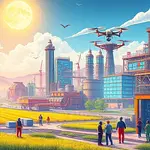
Technological advances have repeatedly transformed finite supplies into expanding flows. Mechanization, digitalization, and renewables have lowered costs and expanded availability, creating unprecedented material and informational abundance.
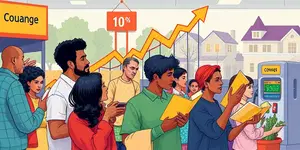
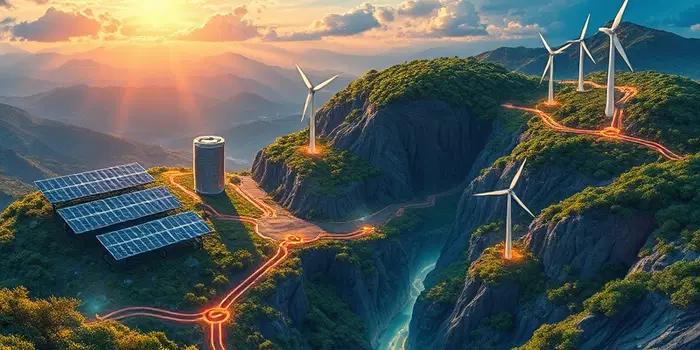
Yet every breakthrough uncovers fresh bottlenecks. Cheap cloud computing demands vast amounts of electricity and cooling. Renewable energy solves one scarcity while demanding critical mineral extraction at scale. Abundant food meets hunger where distribution fails.
At its core, scarcity means that available resources are insufficient to satisfy all wants at zero cost. Abundance, by contrast, emerges through:
Scarcity means resources cannot satisfy wants at zero cost, but economic scarcity arises when extraction is expensive, infrastructure is lacking, or environmental harms make use costly.
Scarcity can take multiple forms, each with unique challenges and policy responses:
Economists use foundational tools to make sense of resource allocation and guide policy:
In 1798, Thomas Malthus warned that population could outstrip food production, framing the resource-population debate. The Industrial Revolution then harnessed fossil fuels to unlock material abundance but at a high environmental cost.
The 1972 report The Limits to Growth highlighted system dynamics and feedback loops, arguing that unchecked exponential growth risks overshoot and collapse. Julian Simon countered that human ingenuity is the "ultimate resource," while Paul Ehrlich emphasized finite limits.
Today’s discourse spans ecological economics, degrowth advocates, green-growth proponents, and doughnut economics aiming to stay within social foundations and ecological ceilings.
Scarcity often drives solutions through price signals and innovation. Core mechanisms include:
These mechanisms shift cost curves and open new supplies, but each also brings fresh environmental and social challenges—especially when energy and mineral demands surge.
Abundance in one domain can exacerbate scarcity in another. For instance, abundant digital services depend on scarce electricity and critical minerals such as lithium and copper. Similarly, abundant food production may coexist with malnutrition due to distributional inequalities and infrastructural gaps.
To harness resource abundance responsibly, policymakers and businesses should:
Long-term resilience depends on ecological stewardship that respects planetary limits while enabling innovation. By fostering adaptive institutions, societies can navigate the dynamic interplay between scarcity and abundance.
Resource economics reveals a dynamic landscape where scarcity is not fate but a call to innovate, govern wisely, and align incentives with ecological realities. No single strategy guarantees success; instead, a portfolio of technological, institutional, and behavioral shifts can transform constraints into opportunities.
As you engage with this paradox, remember that every abundance revolution carries hidden scarcities. By anticipating these trade-offs and embedding sustainable practices into policy and industry, humanity can chart a path from scarcity to genuine, inclusive abundance.
Ultimately, the journey from fixed limits to adaptive abundance is ongoing. It challenges us to think systemically, act collaboratively, and innovate responsibly—recognizing that the true wealth of our civilization depends on balancing human aspiration with the world’s finite gifts.
References