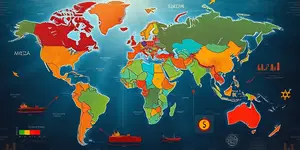

Emerging markets are rapidly rewriting the rules of finance, driven by opportunity and innovation. From mobile wallets to digital lending, tomorrow’s financial landscape is being shaped beyond traditional banking hubs.
The global economy in 2026 faces headwinds, but emerging markets remain resilient growth engines. Forecasts from the World Bank and the IMF highlight moderate expansion tempered by geopolitical strains and tighter finance.
These projections reflect shifting assumptions on conflict, energy prices, and trade tensions. While slower than pre-pandemic trends, growth in emerging economies still outpaces most advanced markets.
Major macro constraints include interest rates, FX risk, elevated debt burdens, weaker trade, and climate shocks. Yet governments and private actors are forging ahead to build durable digital infrastructure.
Perhaps the most emblematic story is how phones are unlocking financial access. Between 2017 and 2024, digital transactions per adult in developing economies soared from 55 to 251 annually—a fourfold rise.
The World Bank’s Global Findex shows that 40% of adults saved in financial accounts in 2024, while mobile-money saving doubled since 2021 in many regions. Women’s account ownership also climbed markedly.
These gains illustrate that digital payments are the entry point for broader services such as credit, insurance, and personalised savings plans. Agents, wallets, and apps are replacing branch-centric models.
The IMF’s expanded Financial Access Survey now tracks e-money, e-wallets, mobile-enabled loans, peer-to-peer lending, equity crowdfunding, and neobanks across 163 economies. This breadth highlights the changing definition of banking.
In markets with few branches, agent networks and digital rails serve as the backbone. With reliable data on transactions, credit scoring can be more inclusive and dynamic, enabling tailored products.
Sub-Saharan Africa has added 100 mobile-money accounts for every 50 new deposit accounts per 100 adults since 2018. In many countries, mobile wallets now outnumber traditional bank accounts by more than two to one.
Other markets—Ghana, Tanzania, Uganda, and Rwanda—demonstrate rapid uptake of digital credit, savings, and merchant tools. Young, connected populations drive demand for affordable financial services.
No innovation journey is risk-free. Digital finance expansion must contend with cybersecurity threats, regulatory fragmentation, and infrastructure gaps.
Policymakers and providers must collaborate on robust consumer protection, interoperability standards, and financial education to build trust and resilience.
The winners in this financial frontier will be those who pair cutting-edge digital infrastructure with sound policy and strong institutions. Investments in cybersecurity and open-data frameworks are critical.
Emerging markets can leapfrog legacy systems by embracing blockchain-based payments, embedded finance, and AI-driven credit scoring. Yet success hinges on stable macro conditions and inclusive regulation.
By aligning technology with local needs, stakeholders can unlock the full potential of financial inclusion and drive sustainable growth across emerging markets.
As a global laboratory for finance’s next chapter, these markets remind us that innovation often arises where constraints spark creativity. The journey ahead is complex, but the promise of a more inclusive and dynamic financial world has never been clearer.
References