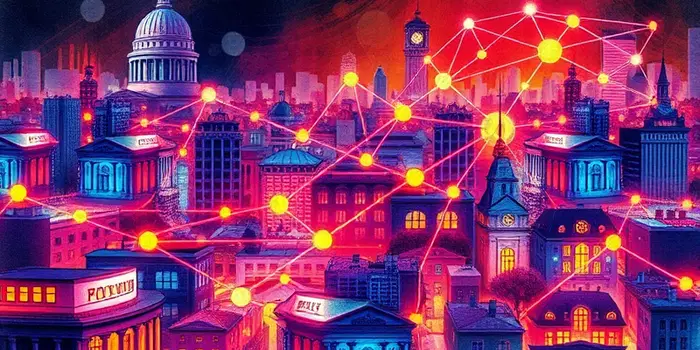
Credit is often viewed as a series of individual loans, but in reality it operates as a vast, complex network. This network binds borrowers, lenders, markets, intermediaries, infrastructures, and regulators into a single ecosystem.
In this article, we explore how money moves through multiple stages—from origination to distribution—and how stresses in one corner can ripple across the entire system.
The credit ecosystem comprises diverse participants, each playing a vital role in connecting savings with funding needs. Understanding these players reveals how local lending decisions can have global repercussions.
Each group interacts through loans, deposits, securities, derivatives, guarantees, and collateral arrangements.
At its core, the ecosystem exhibits four defining features that both expand credit availability and create channels for risk transmission.
These elements work together to amplify both growth and vulnerability. While lenders transform maturity and liquidity to meet borrower needs, they also tie themselves to each other through overlapping exposures.
The journey from loan application to repayment involves several stages, each presenting potential channels for stress propagation.
Beginning with origination, lenders assess a borrower’s income, collateral, and credit history. Once approved, funds flow into the economy, supporting consumption, investment, or public projects. Loans may remain on the bank’s balance sheet or be sold, securitized, or financed through markets.
Repayments return cash to lenders and investors, enabling further lending. However, when borrowers default or market liquidity dries up, the strain can reverberate through funding sources, collateral valuations, and depositor confidence.
Losses or liquidity shortages in one segment of the system can transmit to others through multiple channels:
These interconnected links mean that stress in a hedge fund, for example, can quickly affect banks, insurers, and even sovereign borrowing costs.
Given the systemic nature of credit, strengthening the ecosystem requires both macroprudential policies and firm-level risk management:
By recognizing credit as more than a collection of loans, we can design policies and practices that safeguard the flow of funds without stifling economic growth.
In an age where financial markets span continents and technologies evolve rapidly, understanding the credit ecosystem’s interdependence is essential. Only by seeing how each piece fits into the larger network can participants build the resilience needed to withstand future shocks.
References