
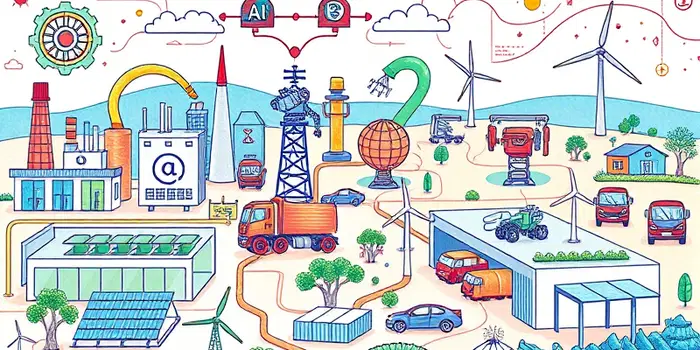
We stand at the threshold of a new industrial era, where the convergence of technologies and global trends will reshape every sector.
According to the World Economic Forum’s Future of Jobs Report 2025, multiple forces—from AI to climate adaptation—are set to transform labor markets through 2030.
These figures indicate direction and scale rather than precise outcomes, but they underscore an undeniable momentum.
Beyond raw numbers, the true story lies in cross-industry transformation, affecting finance, healthcare, manufacturing, agriculture, media, and more.
Artificial intelligence stands apart from past digital tools. Generative AI and autonomous agents will touch nearly every knowledge-intensive domain—research, coding, design, diagnosis, and beyond.
We are shifting from AI as a prompt-response tool to AI as an agentic collaborator that can execute multistep tasks, interact with software, and learn continuously. This evolution raises critical questions:
In professional services—law, accounting, consulting—AI can automate routine work, freeing experts to focus on strategy, relationships, and complex judgment. Software companies will see AI-assisted development alter roles: from manual coding to systems design, data governance, and reliability testing. Media and advertising face a flood of synthetic content, amplifying the need for original creativity, fact-checking, and brand authenticity. Customer service will evolve as AI handles high-volume inquiries while humans address emotional and high-stakes interactions.
Robotics is expanding from structured factory floors into warehouses, hospitals, farms, construction sites, and homes. The adoption of autonomous mobile robots, computer vision, digital twins, and predictive maintenance is creating more resilient and agile operations.
Key industry applications include:
While some routine jobs will decline, demand for technicians, system integrators, and data analysts will surge. Companies that combine human adaptability with robotic precision will gain a competitive edge.
The shift from centralized fossil-fuel plants to distributed renewable generation and digital grid management is one of the most comprehensive disruptions of our time. Solar, wind, batteries, hydrogen, and AI-optimized energy management are redefining the economics of power.
Investment in energy technologies reached nearly $200 billion in 2025, reflecting a global commitment to decarbonization.
This transition impacts every sector: automotive firms compete on batteries and charging networks as well as engines, while construction companies design net-zero buildings equipped with smart energy systems. Utilities, software developers, and financial institutions are building new business models around microgrids, demand response, and grid-scale storage.
Whether you are an individual professional or a corporate leader, navigating this wave of change requires proactive steps.
Organizations that embrace this holistic approach to innovation will not only survive but thrive as traditional boundaries blur and new opportunities emerge.
Disruption can be daunting, but it also carries immense potential for growth, inclusion, and sustainability. By understanding the interplay of AI, robotics, energy transition, and global trends, we can shape an industrial landscape that benefits workers, consumers, and the planet.
Remember: transformation is not a destination but an ongoing journey. Prepare, adapt, and lead with purpose. The industries on the brink of transformation await those bold enough to steer them toward a brighter tomorrow.
References